Why Is My Toilet Running Constantly? Causes, Fixes & When to Call
A running toilet wastes water 24/7, but most fixes trace to three cheap parts. Learn to diagnose, repair, and know when to call a plumber.
That faint hiss from the bathroom. The tank that refills itself at 3 a.m. for no reason. A constantly running toilet is more than an annoyance — it's water (and money) trickling straight down the drain, 24 hours a day. The good news: the vast majority of running toilets come down to one of three cheap, replaceable parts, and most homeowners can fix them in under 30 minutes. This guide walks you through how to stop the water right now, pinpoint your exact problem, and repair it step by step — plus the clear signs that your running toilet is actually a bigger issue worth a plumber's visit.
Quick answer: the 3 most common causes
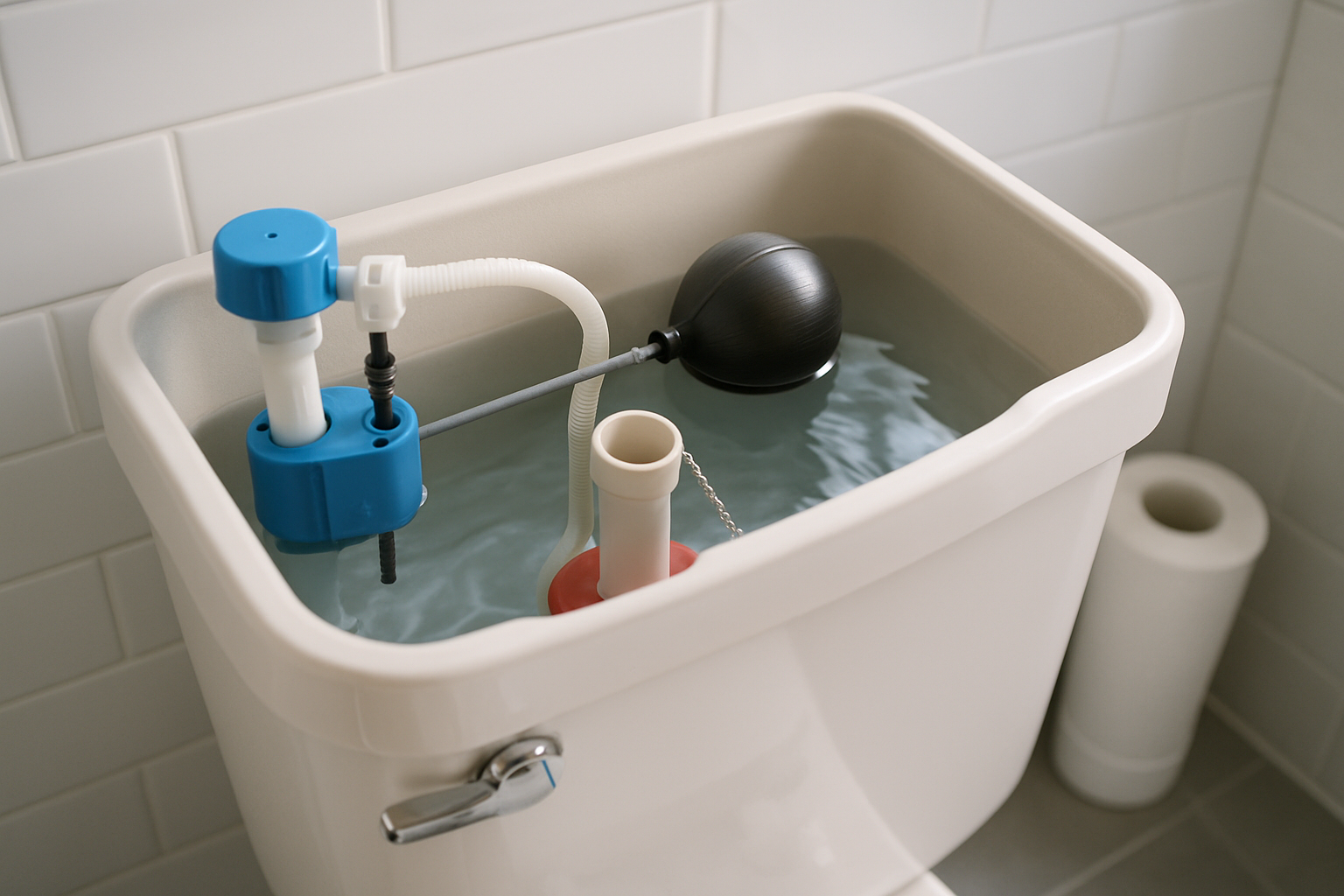
Nearly every running toilet traces back to one of three inexpensive parts inside the tank:
- The flapper — the rubber seal at the bottom of the tank. This is the single most common culprit. Roto-Rooter notes that the most common cause of a running toilet is a broken or worn flapper, so it's the first thing to check if you suspect a leak. Over time the rubber decays and lets water slowly seep into the bowl.
- The fill valve — the tall column that refills the tank after a flush. According to Korky, if water keeps flowing after the tank is full or the float doesn't rise and shut the valve off, the fill valve isn't functioning correctly.
- The float — set too high, and water spills endlessly into the overflow tube. As one plumbing guide explains, if the float is set too high, the tank keeps filling until it reaches the overflow pipe, and the toilet will never stop running.
First: stop the water now and confirm the leak
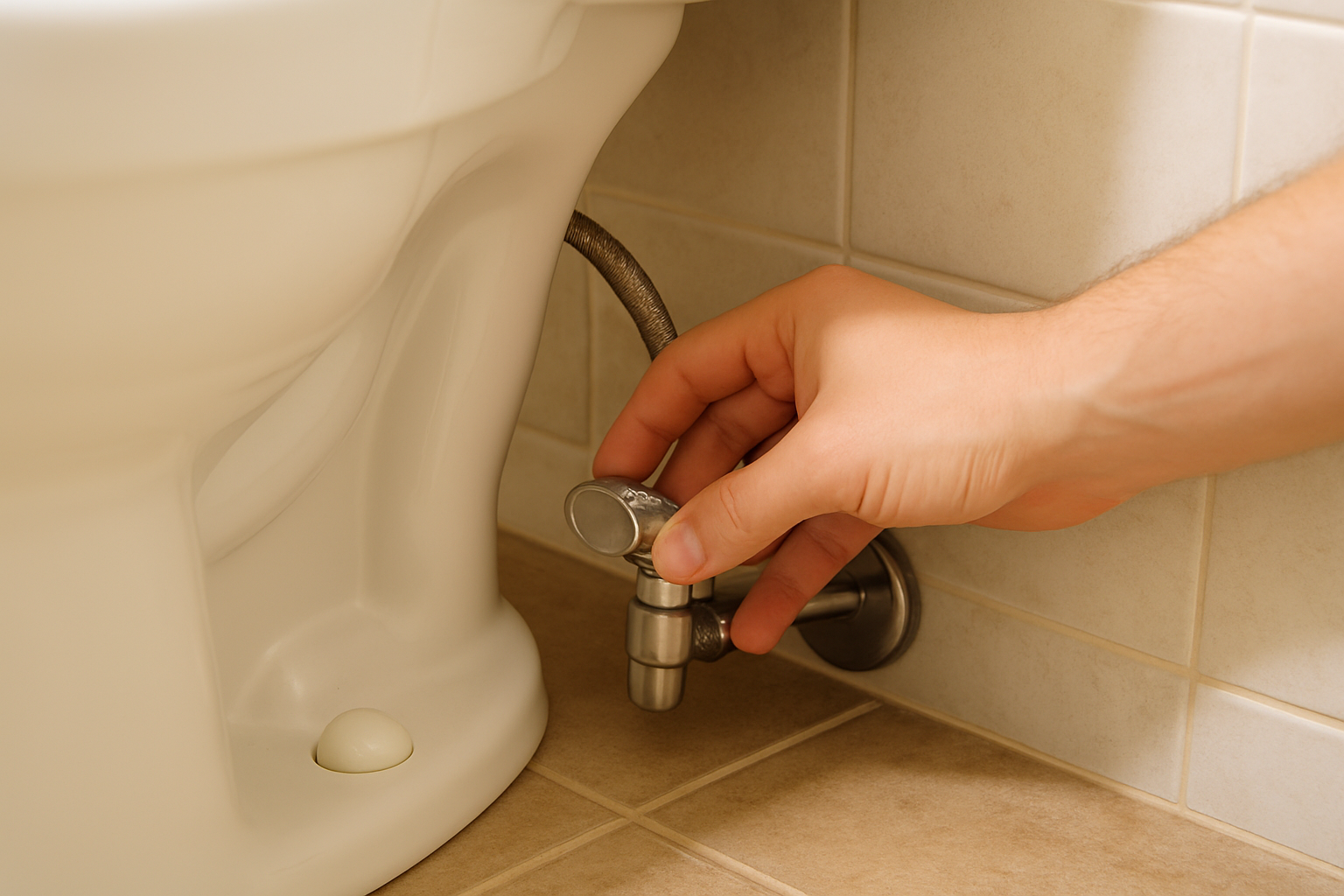
Before you diagnose anything, take two minutes to stop the waste and prove where it's coming from.
How to stop a running toilet immediately — no tools needed
Reach behind the toilet, near the floor, and find the shutoff valve on the supply line. Turn it clockwise to cut the water. Plumbers describe this valve as located against the wall, on the left side of the toilet underneath the tank. No tools required — just turn by hand. If you can't reach a plumber right away, this alone stops the water waste. In a pinch, you can also lift the tank lid and manually push the flapper down or prop the float up, but shutting the valve is the cleanest fix.
Run a dye test to confirm the leak
This is the step most online guides skip, and it's the most useful diagnostic you have. Denver Water recommends you drop a dye tab or a few drops of food coloring into the tank — if there's a leak, color will appear in the bowl after about 10 minutes. If the color bleeds through, water is escaping past the flapper or flush-valve seal. A second test isolates the problem further: Fluidmaster suggests you turn off the water with a full tank, mark the water level with a pencil, and wait 15 minutes — if the level drops, you've confirmed a leak.
Diagnose your specific symptom
How your toilet misbehaves tells you which part is failing:
- Runs constantly, never stops: A worn flapper or damaged flush-valve seat is letting water flow continuously into the bowl, forcing the fill valve to run nonstop.
- Runs after every flush, then stops: Usually a chain that's too long catching under the flapper, or a flapper that isn't reseating. As Roto-Rooter notes, if the chain is too long it can fall between the flapper and seat, allowing water to drain into the bowl constantly.
- Turns on randomly ("ghost flushing"): A slow flapper or flush-valve gasket leak. Fluidmaster explains that a flush valve gasket leak is slow, and ghost flushing can occur hours or even days apart.
- Water hisses into the overflow tube: The float is set too high or the fill valve won't shut off.
Why won't my toilet stop running even when the float is up?
If lifting the float by hand stops the running, your fill valve or float adjustment is the problem. But if the toilet keeps running with the float held up, the leak is downstream — the flapper or flush-valve seal isn't sealing, so water bypasses the float entirely. That points you to the flapper and seat, not the fill valve.
How to fix each cause, step by step
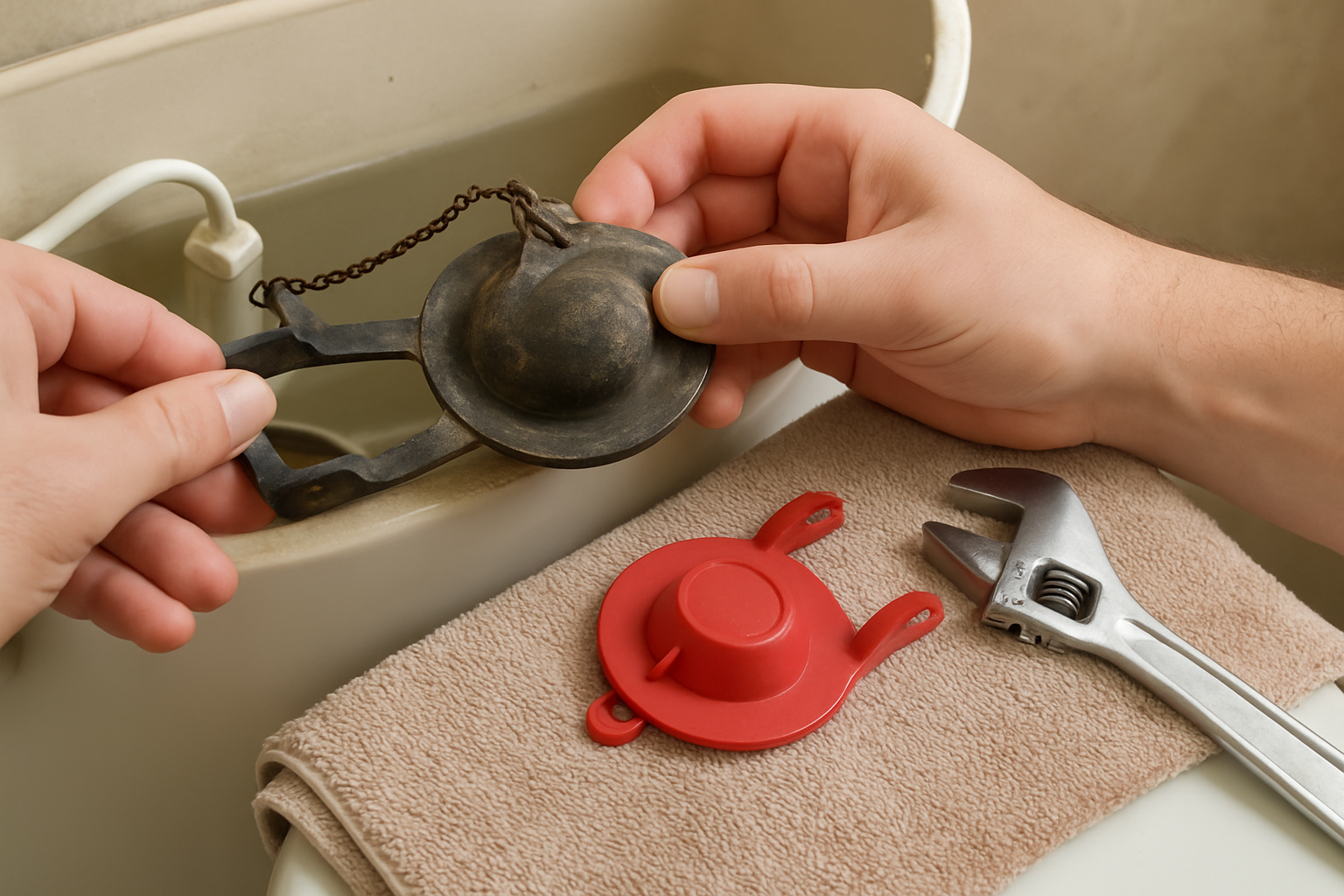
Tools you'll need: usually just your hands, an adjustable wrench, a sponge, and a replacement part. Industry guides confirm these repairs are within reach for any homeowner comfortable shutting off a water supply and using basic hand tools, taking under 30 minutes with universal-fit parts from any hardware store. Always turn off the supply valve and flush to drain the tank first.
Fix 1: Replace the flapper (parts: ~$5–$15)
With the water off and tank drained, unclip the old flapper from the flush-valve ears and detach the chain. Take it to the store to match size and shape exactly. Family Handyman advises you remove the old flapper and take it with you to find a matching replacement. Snap the new one in, reattach the chain with just 1–2 links of slack, turn the water back on, and test. While you're in there, feel the flapper and clean any mineral buildup — a dirty flapper can leak because algae or minerals prevent it from closing properly.
Fix 2: Adjust the float (parts: $0)
If the water is spilling into the overflow tube, lower the water level. Modern valves have a screw or clip on the float; turn it to drop the shutoff point about an inch below the top of the overflow pipe. This costs nothing and takes seconds.
Fix 3: Replace the fill valve (parts: ~$10–$50)
If the tank never stops filling even with a good flapper, swap the fill valve. Drain the tank, disconnect the supply line and lock nut beneath the tank, lift out the old valve, and install the new one following its instructions. Fluidmaster's diagnostic path confirms this order: first determine whether you have a fill-valve issue or a flapper/flush-valve issue, replace the flapper first as the most common problem, and if it still drains down, replace the flush valve.
How do I fix a running toilet with a button (dual) flush?
Dual-flush toilets — a top question and one barely covered by other guides — work differently. The culprit is usually the flush-valve seal, not a flapper. Toilet Haven notes that most of the time a dual-flush toilet that won't stop running has a problem with the seal. Turn off the water, remove the tank lid, and lift out the flush-valve cartridge (usually a twist to unlock). Hard water is a frequent cause — limescale builds on the seal and creates a rough surface that prevents a watertight seal. Clean the seal and its seat; if it's warped or hardened, replace it. Also check that the flush buttons fully return to position, since a stuck button can hold the valve open.
Repair vs. replace: what it costs
Doing it yourself is cheap — the parts run just a few dollars. HomeGuide puts a DIY flapper fix at about $12 to $30. If you'd rather call a pro, expect a reasonable bill for a simple job. Yelp's cost data shows that plumber quotes to fix a running toilet range from $145 to $270, including parts and labor to adjust or replace tank parts. Angi lists a similar range of $100 to $400 for repairing a running toilet. One important note for Texans: emergency after-hours service typically adds a 30% to 50% premium. When a toilet is 20-plus years old and needs its third repair, replacement often makes more sense than another patch.
When a running toilet signals a bigger problem
Most running toilets are simple. But a few point to something you shouldn't DIY:
- A worn or pitted flush-valve seat. If you've replaced the flapper and it still runs, the flush-valve seat is probably rough or pitted and needs professional repair or replacement.
- High water pressure. Roto-Rooter points out that high water pressure can cause a toilet to run, and a professional plumber can help resolve this issue.
- Water on the floor or a rocking tank. That signals failing tank bolts, a bad gasket, or a wax-ring problem — a repair that involves removing the toilet.
This is where TruFlo Plumbing earns its keep. With over 15 years of licensed, insured residential experience and 24/7 emergency service across Texas, we handle the diagnostics that go beyond a flapper swap — worn valve seats, pressure issues, and hidden leaks — honestly and without upselling you a new toilet you don't need. If you're weighing your options, our guide on how to choose a licensed, insured plumber in Texas is a good starting point, and if you suspect the running water is masking something worse, 7 signs you have a hidden water leak in your home is worth a read.
How much a running toilet adds to your water bill
This is the part that motivates most people to fix it fast. The EPA estimates a running toilet can waste about 200 gallons every day. Over a year, that adds up dramatically — Denver Water calculates that a 200-gallon-per-day leak can add between $270 and $470 per year to a water bill depending on location. A severe leak is far worse: HomeGuide warns that a minor leak in one toilet can cost $1,000 a year, and if the toilet is always running that figure can double. So what happens if you ignore it? You keep paying that surcharge every month, and a small worn part gradually damages the flush-valve seat, turning a $15 fix into a full rebuild.
How to prevent it from happening again
A few simple habits keep tank parts sealing for years:
- Skip in-tank cleaning tablets. Chlorine and bleach tablets are the number-one killer of flappers. HomeGuide notes flappers should last 4 to 5 years, but harsh chemical cleaners can shorten that to under a year.
- Inspect the tank every 6–12 months. Check the flapper for stiffness and the seat for mineral buildup, and clean with vinegar if needed.
- Run a dye test twice a year. It catches silent leaks before they hit your bill.
- Address hard water. Texas hard water accelerates limescale on seals — the same buildup that causes freeze-related issues covered in our guide to winterizing your pipes to prevent freezing in Texas.
The bottom line
A constantly running toilet is almost always a quick, affordable fix — shut off the supply valve, run a dye test, and replace the flapper, fill valve, or adjust the float. But when the seat is worn, the water pressure is too high, or you're seeing water where it shouldn't be, that's a job for a licensed pro before it becomes an expensive one. If you're in Texas and the DIY path isn't stopping the running — or you'd simply rather have it done right the first time — TruFlo Plumbing offers honest, licensed, insured service with 24/7 emergency availability. Reach out today for a straightforward diagnosis and a clear quote, and stop flushing money down the drain.