DIYFeb 3, 20263 min read
When to call a plumber vs. grab a plunger
The honest line between a two-minute DIY fix and a main-line problem — and the multi-drain rule that tells you which one you have.
Not every clog needs a truck in the driveway. Here's the honest line between a two-minute DIY fix and a problem that gets more expensive the longer you poke at it.
Grab the plunger when…
- One fixture is slow or stopped and everything else drains fine. A single toilet, sink, or tub clog is almost always local.
- The toilet backs up occasionally — a flange plunger (the kind with the fold-out cup) and fifteen seconds of steady strokes clears most of them.
- The bathroom sink is slow — it's nearly always hair at the stopper. Pop the stopper, pull the wad, done.
Put the plunger down when…
- Multiple drains back up at once. Toilet bubbles when the tub drains? Water comes up in the shower when the washer empties? That's the main sewer line, not a fixture — nothing you pour or plunge reaches it.
- It's the lowest drain in the house. Sewage at a floor drain or ground-floor tub means the main is blocked and everything upstream is headed there.
- The same fixture clogs monthly. Recurring clogs are a symptom — roots, a belly in the line, or scale. Clearing the symptom repeatedly just rents you time.
- You're reaching for chemical drain cleaner. Caustic cleaners rarely clear a real blockage; they sit in the pipe, eat at older metal traps, and burn whoever opens the cleanout next. We'd rather you didn't.
The multi-drain rule is the big one: two fixtures backing up together is a main-line problem, every time.
What we do differently
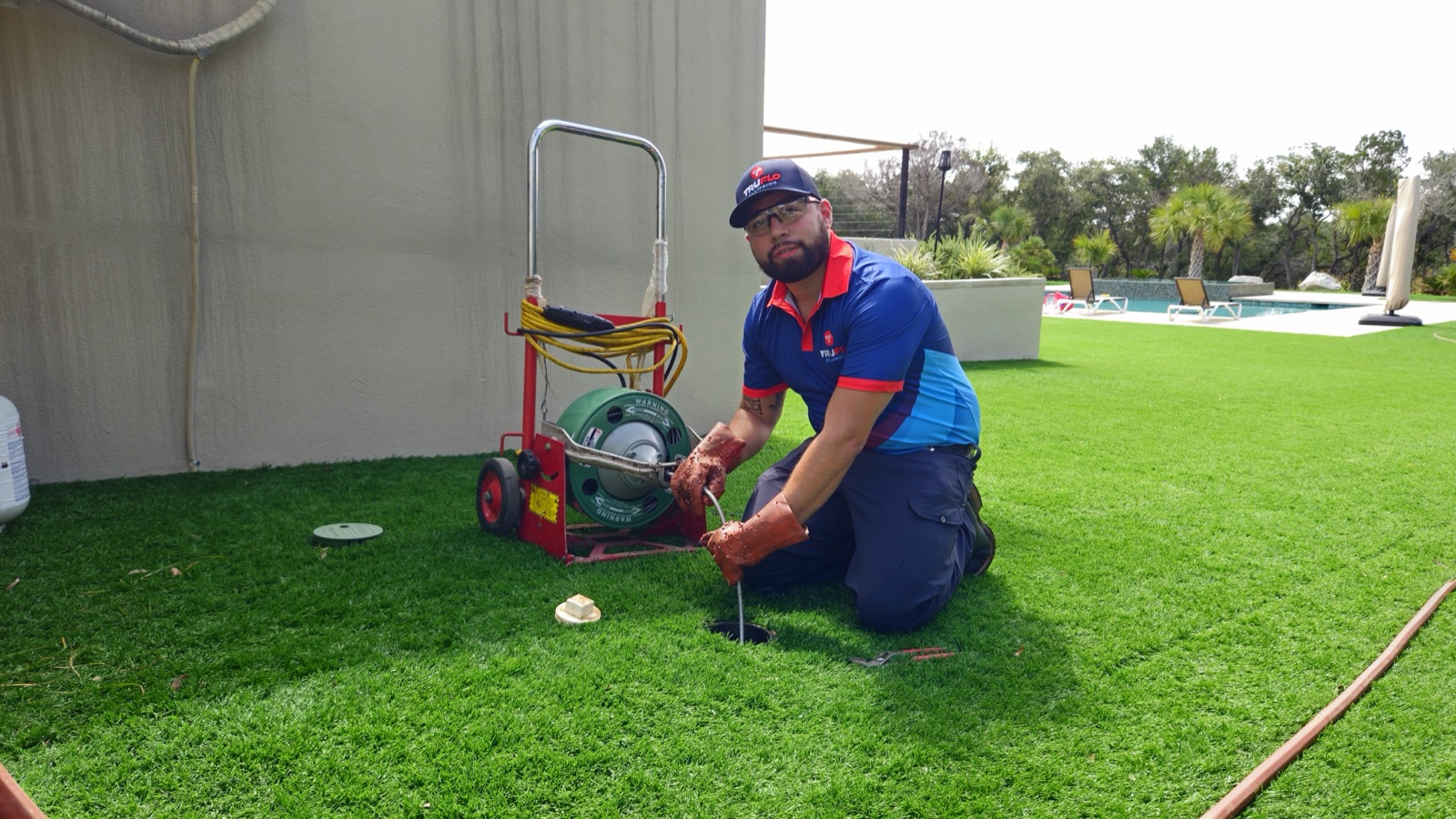
For main-line stoppages we run a camera before and after clearing — you see the roots or the break on video, and you know whether it was a one-off or something worth fixing properly. Flat price quoted before we start, no surprise "emergency" charges at night.